Monday, July 22, 2013

How To Keep Yourself Sane When You're Stuck In Traffic

Traffic during your commute to and from work can be a nightmare. It'll go much easier the less stressed you get. This article from eHow.com will help you stay sane and safe while you're stuck in traffic.

Things You'll Need
•    Music
•    Books on CD
•    positive attitude
•    coffee
•    alert mind

Instructions
1. Before you get in your car brew a good cup of coffee and pour it in a to-go mug. Stopping in traffic is stressful, and this way you won't have to think about stopping to get your caffeine fix.

2. Get online and go to a website that will tell you what routes have traffic jams. Sigalert.com is a good choice and makes it easy to see which freeways are experiencing traffic jams through a five color system. Red means severe traffic jams, orange means moderate traffic jams, yellow is minor traffic, blue means traffic is going around 30 mph, and green you're in the clear!

3. Once you get in your car, roll down the windows to get some fresh air on your face. This will help you stay awake and alert in traffic. If it's cold outside, put the heater on and direct it at your feet and roll down the windows just a little so you still get fresh air.

4. Make sure you have traffic maps or a good set of directions if you are going somewhere for the first time. Concerns of getting lost or getting delayed because you don't know where you are going only add to the stress of driving in traffic.

5. Turn on your local radio and find out relevant traffic information- if any traffic jams have cleared up or changed while you have been driving you can take alternate routes.

6. Put in a CD of upbeat music to keep you positive and energized while driving. If you are sick of all your music, invest in some books on CDs. They provide an incredible distraction from the traffic around you and also provide an opportunity to catch up on the good literature you haven't read because you've been stuck in traffic!

Click the link to read the entire article from ehow.com: http://bit.ly/14iernn

Monday, July 15, 2013

Famous Cars: Where Are They Now?

Rosa Parks' bus? Kennedy's limousine? Bonnie and Clyde's death mobile? These are some of the most famous American cars, but whatever happened to them? These cars are almost as legendary as the people who drove them - but unlike their owners, the cars still reside in different locations all around the world. Some of them went through very interesting to journeys to get to their current resting spots.

AOL Autos explores the stories behind these legendary vehicles and lists where you can find them today, just in case you'd ever want to go on a journey yourself to see these famous vehicles.

Bonnie and Clyde's Death Car
When Bonnie Parker met Clyde Barrow it was, by all accounts, love at first sight. The love resulted in three years of haphazard robbery, kidnapping, murder and shootouts across the country. The pair met their end when police sprayed the stolen 1934 Ford Deluxe they were riding in with 130 rounds of bullets on May 23, 1934.

First, the car was towed to the local furniture store and funeral parlor in downtown Arcadia, La. The car was bought and sold by various promoters for use in sideshows at county fairs and circuses. There were many imitators, but the original car had various proofs of authenticity, including Barrow's torn and bloodstained shirt signed by his sister and several letters attesting to its authenticity. Theses items are on display, along with the bullet-riddled Ford, at Whiskey Jack's Casino in Primm, Nev. The casino operator bought the car, bloodstains and all, for $175,000 in 1973.


Elvis's Pink Cadillac
To say Elvis was a fan of the Cadillac is a bit of an understatement. The King gave away countless Cadillacs to family, friends and hangers-on. At his funeral, a 1977 Miller-Meteor Landau Traditional Cadillac hearse transported Elvis' body, with a silver Cadillac limousine leading the procession and 16 white Cadillac limousines behind filled with mourners heading to the Memphis Cemetery.

His favorite Cadillac of all was a pink 1955 Fleetwood 60 Special, which replaced a pink 1954 model after it caught fire due to faulty brake lining. Elvis would own his pink Cadillac for the rest of his life. He originally bought it for his mother, but she never drove it. The pink paint was mixed just for Elvis and is known as 'Elvis Rose'. The Fleetwood has been on display since 1982 at the Elvis Presley Automobile Museum at Graceland.


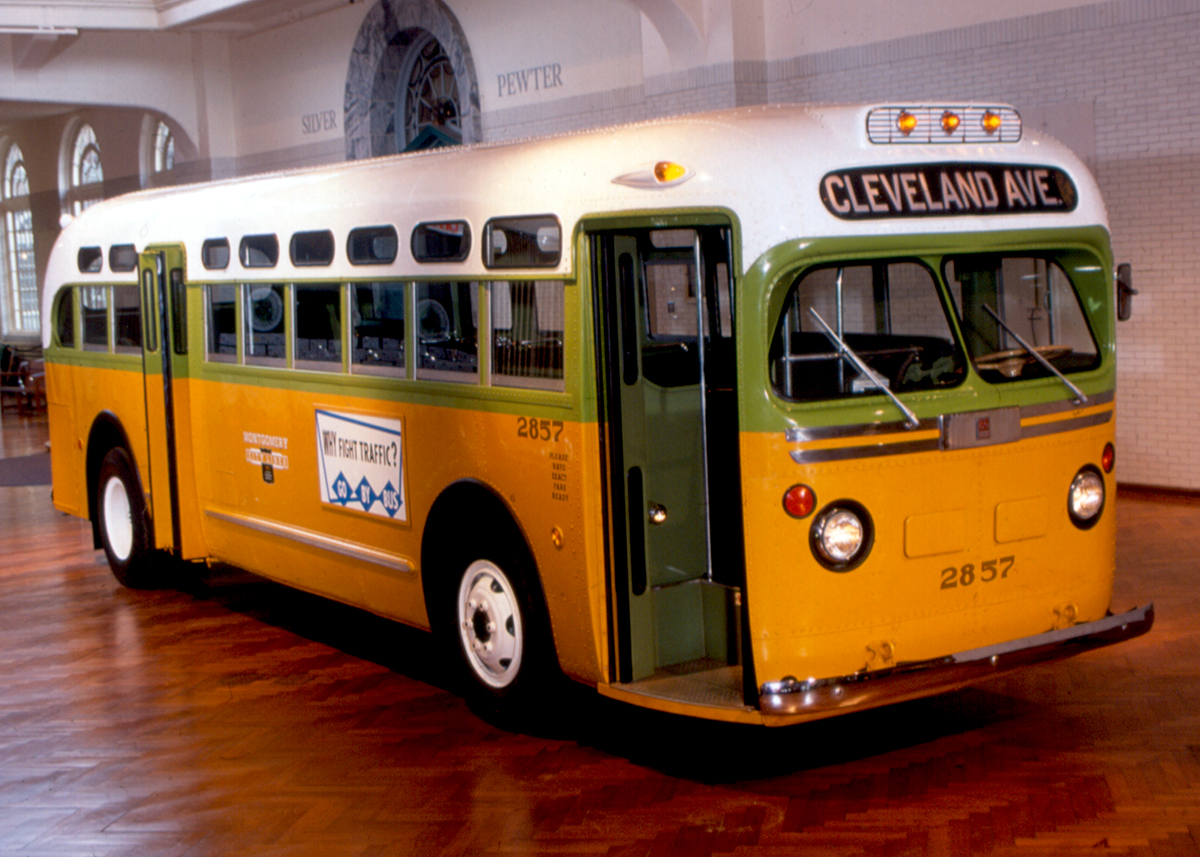
Rosa Parks' Bus
The bus that helped Rosa Parks launch her role in the Civil Rights movement survives to this day. On December 1, 1955, the 42-year-old Parks boarded the bus after a long day as a seamstress. When the "whites only" seats at the front of the bus filled up, a white man asked her to get up so he could sit. Parks refused, resulting in her arrest under Jim Crow laws. Her arrest helped sparked the famed Montgomery Bus Boycott, the first of many nonviolent protests staged by marginalized black populations in America.

The General Motor's bus rusted in a field for 30 years before The Henry Ford Museum spent $300,000 restoring it. The bus is currently on display at the museum. Visitors are welcome to sit in the bus, which is filled with interactive displays and teaching tools.


Kennedy's Limousine: SS-100-X
SS-100-X was the Secret Service name given to President John F. Kennedy's navy blue 1961 Lincoln 74A Convertible. The Lincoln featured $200,000 worth of modifications, but no bulletproofing. There were several domes that fit over the top of the convertible, but it made the cabin extremely hot and was also not bullet proof. It was in this Lincoln that Kennedy, First Lady Jacqueline Kennedy, the Texas governor and his wife sat in on November 22, 1963, when three shots fired from a book depository ended the President's life.

Surprisingly, the Lincoln was kept in service another eight years after the Kennedy's death. After the assassination, a company called Hess & Eisenhardt added reinforcements and safety measures that were missing when Kennedy rode in the car. The Lincoln was outfitted with titanium armor plating, bullet-resistant glass, and a permanent bulletproof roof. The Lincoln was also painted black by incoming president Lyndon Johnson, who thought the original navy blue paint would be too reminiscent of the assassination. In 1967 the presidential limo was replaced, but the 1961 Lincoln was kept in the fleet, doing less important duties until it retired to the Henry Ford Museum in Dearborn, Mich., in 1978. The car is still on display there and is rumored to be haunted.


Click the link to read the full article from AOL Autos and learn what happened to other legendary vehicles: http://aol.it/11G6oQR

Monday, July 8, 2013

How to Keep Insurance Rates Low for Teen Drivers


Having a teenager on your insurance policy can inflate your annual cost through the roof! Take a look at the most expensive and inexpensive states, and learn helpful tips that could lower your insurance rates.

It’s known that teens are the most dangerous drivers on the road.  Per mile that’s driven, teens between the ages 16-19 are three times more likely than drivers aged 20 to be involved in a fatal crash, according to Insurance Institute for Highway Safety (IIHS).  Therefore, it is not surprising that adding teens to a car insurance policy would eventually result to an increase in policy cost.

The most surprising is how much the policy increase varies from state to state.

When adding a teen driver to an insurance policy, the annual premium can increase by 84 percent (about $2,000) on average.  But that number can be much lower and higher depending on where you live.

To add a teen driver to an existing policy increased the most in the following five states: Arkansas (116 percent increase), Utah (115 percent), Wyoming (112 percent), Alabama (111 percent), and Idaho (107 percent).

However, the following five states listed showed the smallest percentage increased: Hawaii (18 percent increase), North Carolina (59 percent), New York (62 percent), Massachusetts (65.9 percent), and Montana (66.06 percent).

Hawaii policy structure is a little different.  Their unique law disallows insurance companies to consider age, gender, or length of the driver’s experience, when determining the insurance premium.

Insurance industry experts were surprised by the findings and explained that the reasons for the differences in premium increases were many and nuanced. They stem from many factors, according to Mike Barry, spokesman for the nonprofit Insurance Information Institute, including state geography, local driving patterns, and how insurance is regulated in each respective state.

Parents looking to keep insurance costs down can take a few different actions. These include buying your teen driver an older car, ensuring your teen has a safe car and taking advantage of the numerous discounts offered by the major insurance companies.


Click the link to read the complete article from eHow.comhttp://aol.it/12zJpoI
:
 

Monday, July 1, 2013

How Temperature Extremes Affect Your Car Battery


There’s one thing that every car hates – weather extremes. Hot and cold weather affect different parts of cars in different ways. Batteries don’t normally freeze, but they’ll have trouble starting in extremely cold weather. On the other hand, they do work better in warmer climates, but it will have a hard time recharging during extremely hot weather. Batteries work the best when the temperature is moderate.

This article from eHow.com explains exactly how extreme temperatures affect your car battery. Now you’ll know what to expect during this summer’s scorchers!

Temperature Extremes


·         Batteries exposed to temperature extremes can begin to act up in ways outside of normal operations. Most people don’t realize this when purchasing a battery and don’t purchase the right one for their region’s weather conditions. Batteries continually exposed to extreme temperatures on either side of the spectrum may expand, contract, crack, bubble over or damage the inside of your vehicle. In extreme cases, they may even explode.

Affect On Battery Chemicals


·         A battery is a device that uses chemicals to create electricity. Batteries contain reactive plates immersed in sulfuric acid that gather an electric charge with one side being negative and the other positive. Battery draw causes the electrons inside a battery to flow to the positive side, and the electrochemical reaction inside helps to replenish the electronics. Temperature changes affect the electron’s movement inside the battery. Warmth excites the electrons, while cold suppresses or inhibits their actions.

Charge Release


·         The temperature also affects how the battery retains its charge or releases it. Because the cold inhibits the flow of electrons, less charge is released in colder temperatures, while more charge is released in warmer temperatures. Garaging your vehicle in colder climes allows the battery to stay warmer and start quicker.

Choose the Right Battery


·         You can find batteries rated for use in extreme temperatures, especially cold ones where it is important that the battery deliver the cranking amps needed to start the vehicle. Most batteries have a “Cold Cranking Amperage” rating on the battery or CCA that indicates the amperage the battery delivers at zero degrees Fahrenheit while cranking for 30 seconds. Choose the battery suited to your climate to ensure optimum operation when you need it.

Click the link to read the entire article from eHow.com: http://bit.ly/14cCYaP

Monday, June 24, 2013

Fun Car Facts


Start your Monday off with a little humor and check out some fun car facts that many people rarely know about!

Americans have been driving for over 100 years now. The United States is currently ranked first worldwide in cars per capita.  Along the years, there have been an abundant of funny facts on cars and the culture. Keep reading to see the most outrageous true facts!

The Early Days:
·         The first speeding tickets were given out in 1902.  The top speed of most cars then was approximately 45 miles per hour in that time.
·         Some of the first cars used a pair of levers to steer the automobile.  The invention of the steering wheel was not introduced for several years later.
·         Before the 1920s, cars were not equipped with gas gauges.  This forced the drivers to estimate their fuel level.

Drivers:
·         In 1914, Cleveland, Ohio was the first city in the United States to incorporate a traffic light for their roads.
·         On average, Americans will spend a total of two weeks of their life at red lights.
·         In order to drive on all paved roads in the United States, you will have to drive nonstop at 100 miles per hour for over four years.

Miscellaneous:
·         Most car horns play in the perfect pitch in the note of F.
·         The average car contains over 3,000 feet of electrical wires.
·         One out of every 7 seven cars sold in the United States were bought in Southern California.


Read more funny facts from the eHow article by clicking the link: http://bit.ly/hHH1RC

Monday, June 17, 2013

Car Seat Tips

To ensure that your precious cargo is safe during the summer trips, check out theses helpful tips on car seats.
Engineers are working hard to ensure that cars and car seats are designed to keep kids as safe as possible. But it’s up to every parent to take full advantage of these innovations by making sure car seats and booster seats are used and installed correctly. Here’s what you need to know to ensure that your most precious cargo is safe in cars.
Hard FactsRoad injuries are the leading cause of preventable deaths and injuries to children in the United States. Correctly used child safety seats can reduce the risk of death by as much as 71 percent.
Top Tips
·    Seventy-three percent of car seats are not used or installed correctly, so before you hit the road, check your car seat. Here’s a quick car seat checklist to help you out. It takes only 15 minutes. If you are having even the slightest trouble, questions or concerns, certified child passenger safety technicians are able to help or even double check your work.

·    Learn how to install your car seat for free. Safe Kids hosts car seat inspection events across the country where certified technicians can help make sure your car seat is properly installed. They will teach you so that you can always be sure your car seat is used correctly. Find a Safe Kids car seat checkup event near you

·    Buy a used car seat only if you know its full crash history. That means you must buy it from someone you know, not from a thrift store or over the Internet. Once a car seat has been in a crash, it needs to be replaced.
 
·    We know that when adults wear seat belts, kids wear seat belts. So be a good example and buckle up for every ride. Be sure everyone in the vehicle buckles up, too.

·    Never leave your child alone in a car, not even for a minute. While it may be tempting to dash out for a quick errand, the temperature inside your car can rise 20 degrees and cause heatstroke in the time it takes for you to run in and out of the store.

Learn More
While it may seem like you need an engineering degree to figure out which child safety seat is best for your child, don’t worry. We’ve got you covered.


Article courtesy of: http://bit.ly/14BaDZ9

Monday, June 10, 2013

Top 10 Improvements in Engine Design

Imagine your car only having 22 horsepower!  Sounds insane, right? 100 years ago, 22 horsepower was top-notch.  The engine has come a long way and this blog breaks down the biggest engine improvements.

Released in 1908 and known as the first affordable automobile, the Ford Model T was an amazing technology for its time. But the car only had a 22 horsepower engine! Incredible right?  And that’s even better than the horsepower of the first ever automobile – the 1885 Benz Patent Motorwagen, which had a single piston engine and ran with only two-thirds of a single horsepower!

Cars have come a long way since the first automobiles. Engineers are always finding ways to improve our vehicles. Here we take a look at the benefits and drawbacks of the top 10 improvements in engine design during the 150 year process of making vehicles what they are today. We can only imagine what the future holds!

10. The Four –stroke Engine Cycle
 Benefits: More fuel-efficient, less polluting
 Drawbacks: More complicating, more expensive to manufacture


9. Forced Induction
 Benefits: More power without an increase in engine size
 Drawbacks: Fuel consumption and turbo lag


8. Fuel Injection
 Benefits: Better throttle response, increased efficiency, & more power
 Drawbacks: More complexity and potentially expensive repairs


7. Direct Injection
 Benefits: More power, better fuel economy
 Drawbacks: More expensive to make, relatively new technology


6.  Aluminum engine blocks
 Benefits: Lighter weight leads to more efficiency and better handling
 Drawbacks: Can warp at high temperatures


5.  Overhead Camshafts
 Benefits: Better performance
 Drawbacks: Increased Complexity


4.  Variable Valve Timing
 Benefits: Fuel economy, more flexible power delivery
 Drawbacks: Greater cost to produce


3. On-board Engine Computers
 Benefits: Fuel economy, better diagnosis of problems
 Drawbacks: Cost, complexity


2.  Clean Diesels
 Benefits: Torque, fuel economy, cleaner emissions
 Drawbacks: Cost of fuel, low RPMs, higher initial cost


1.      Hybrid Engines
Benefits: Fuel Economy
Drawbacks: Higher initial cost, complexity


To read the full article and find out more about the Top 10 Improvements  in engine design click the link: http://bit.ly/174ZaHM.